// Case study · Power BI
Global Data Job Market Analysis, 2024
An exploratory analysis of 2024 data job postings covering which roles pay the most, whether a degree is really required, how remote work is distributed, and how hiring changed through the year.
$156K
Senior Data Scientist median salary
33%
Of postings don't mention a degree
13%
Of postings are work-from-home
90%
Of postings are full-time
// The business problem
Demand for data professionals keeps growing. Clarity doesn't.
Job seekers often lack clear visibility into:
→ Which data roles pay the most?
→ Is a university degree always required?
→ How is remote work distributed across data roles?
→ How do salaries differ across countries and job types?
This project analyses 2024 data job postings to uncover salary trends, hiring patterns, degree requirements and geographic distribution, helping job seekers, career switchers and recruiters make more informed decisions.
Dataset
Data job postings scraped from Google in 2024, aggregated from multiple job platforms.
Tools used
Power BI: data modelling, DAX and dashboards
Excel / CSV: data inspection and preparation
Star schema: fact and dimension tables
Public web data: scraped job postings
Dashboard structure
1 · Salary & degree analysis
2 · Trends & time series
3 · Job characteristics
4 · Geographic insights
// 01 · Salary & pay
Which data roles pay the most?
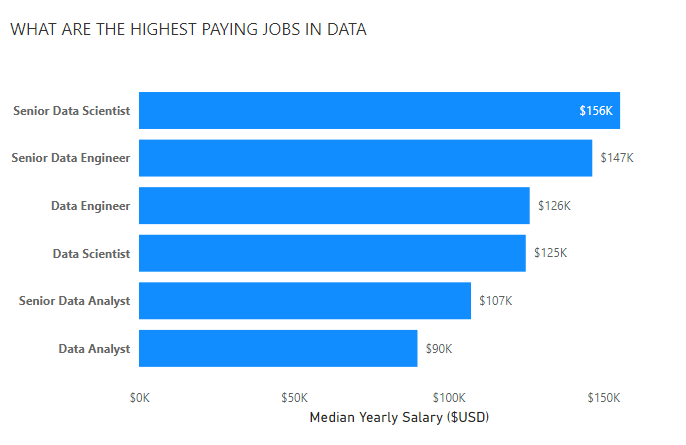
Highest-paying data jobs in 2024
Median yearly salaries across major data roles. Senior positions command the highest pay, led by Senior Data Scientists ($156K) and Senior Data Engineers ($147K). Technical engineering roles consistently out-earn analyst roles, and the progression from Data Analyst ($90K) to senior technical roles shows a clear salary growth path.
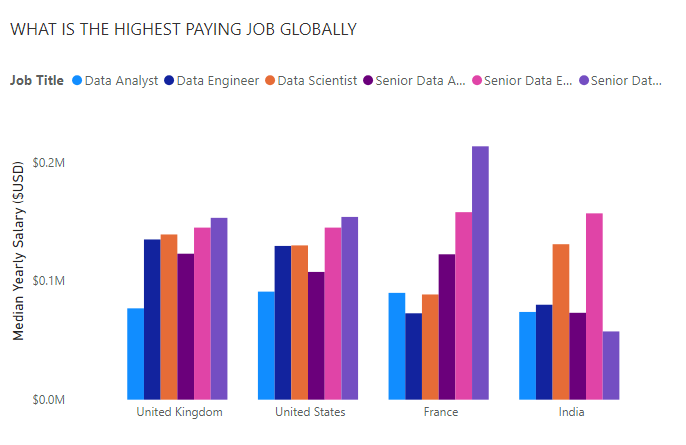
Highest-paying data role globally
Across the top four countries, senior technical positions earn the most everywhere, with especially strong peaks in France and the United States. Pay depends on both seniority and country, so geographic targeting matters for data professionals seeking higher pay.
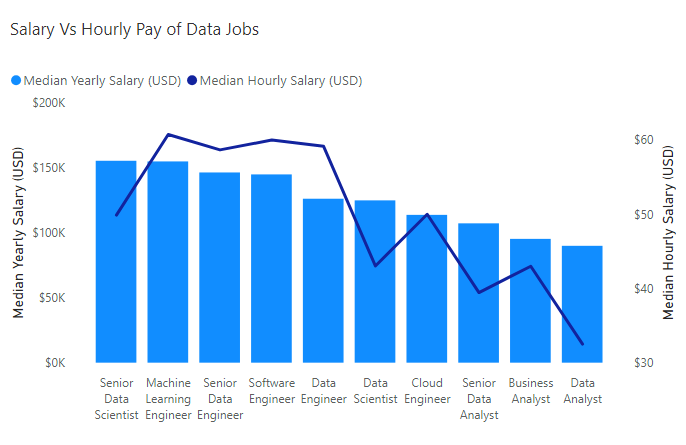
Yearly salary vs hourly pay
Yearly and hourly medians broadly move together, but not perfectly. Machine Learning Engineers top the hourly rates at around $60/hour, while Senior Data Scientists lead on yearly salary but sit closer to $50/hour.
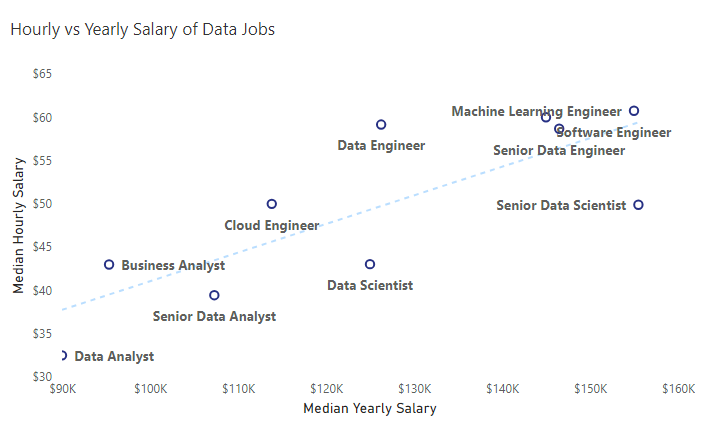
Salary distribution patterns
Plotting hourly against yearly medians shows a clear positive relationship. Data Scientist and Senior Data Scientist sit below the trendline (strong salaries, lower hourly rates), while Data Engineer sits well above it.
// 02 · Degrees & skills
Do you really need a degree?
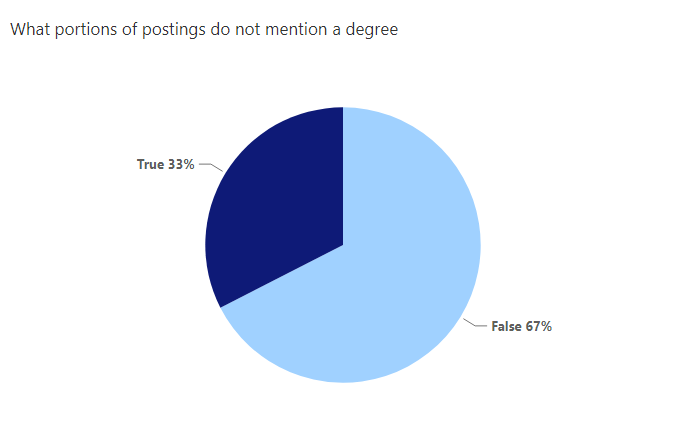
Postings that don't mention a degree
Across all postings, 33% don't mention a degree at all. Roughly one in three data jobs is open to candidates who can prove their skills.
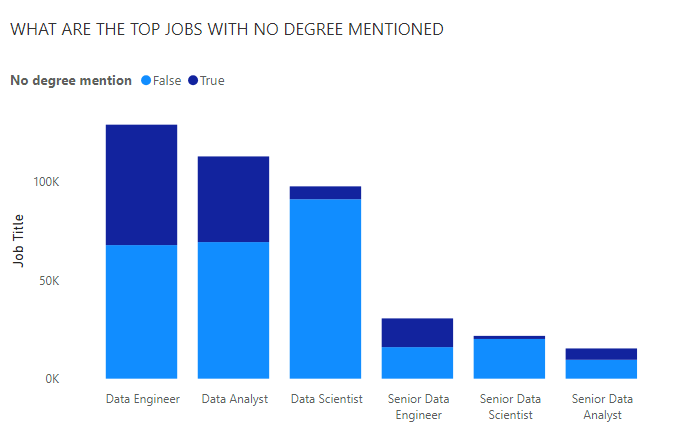
Top-paying jobs with no degree mentioned
Data Engineer, Data Analyst and Data Scientist roles show a substantial number of postings without a degree requirement, suggesting parts of the market are increasingly skills-focused rather than credential-driven.
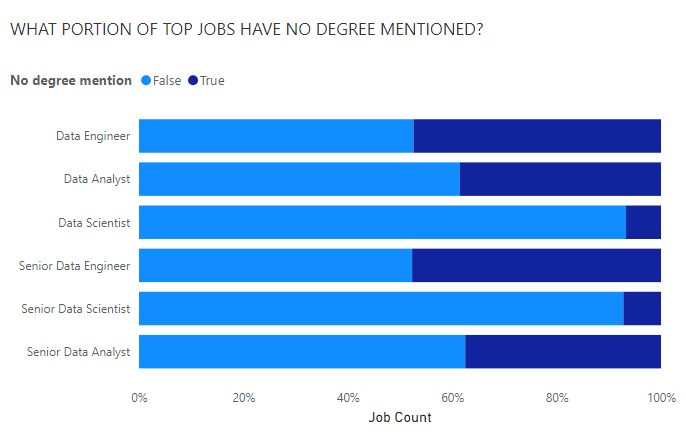
Share of postings with no degree mentioned, by role
Degree requirements remain common, but a meaningful share of postings, particularly for Data Engineers and Data Analysts, don't require one. Senior roles show stronger degree mentions, pointing to a gradual shift toward skills-based hiring at entry and mid level.
// 03 · Trends & job characteristics
How did hiring move through 2024?
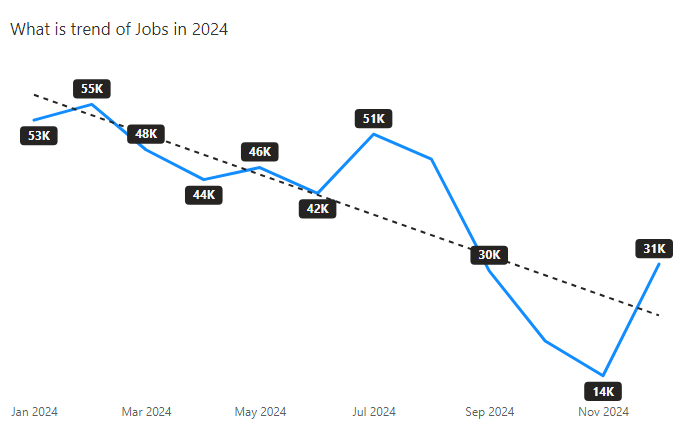
Data job postings across 2024
Overall monthly posting volume. Hiring started strong, peaked early in the year and gradually declined toward Q4, with a sharp drop in the final months before a slight recovery. The downward trendline suggests cooling demand, likely reflecting wider market adjustments or seasonal slowdowns.
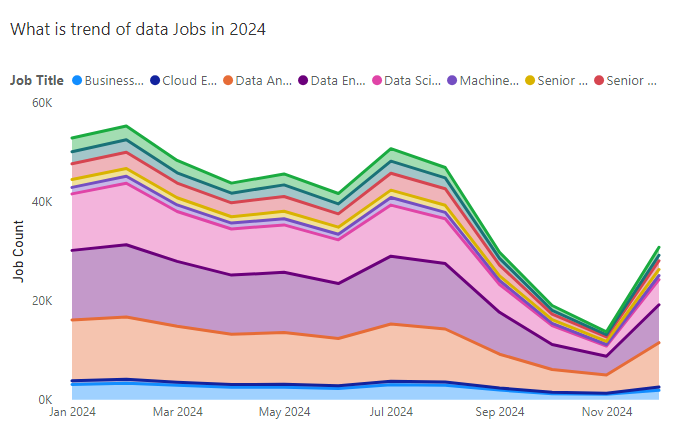
2024 posting trend by job title
Hiring peaked early in the year and again mid-year before declining toward Q4. Data Engineer and Data Scientist roles consistently show higher demand, while niche roles such as Machine Learning and Cloud positions show more moderate but stable demand.
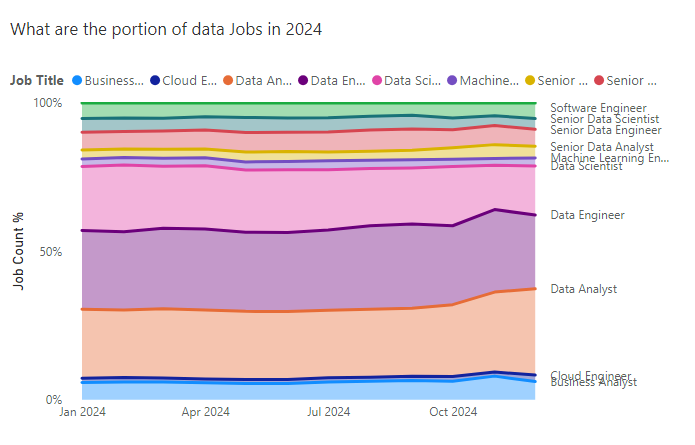
Share of postings by role
Data Analyst, Data Engineer and Data Scientist roles make up the bulk of postings all year. Data Analyst roles grew their share toward the end of the year, while senior and specialist roles stayed small but steady.
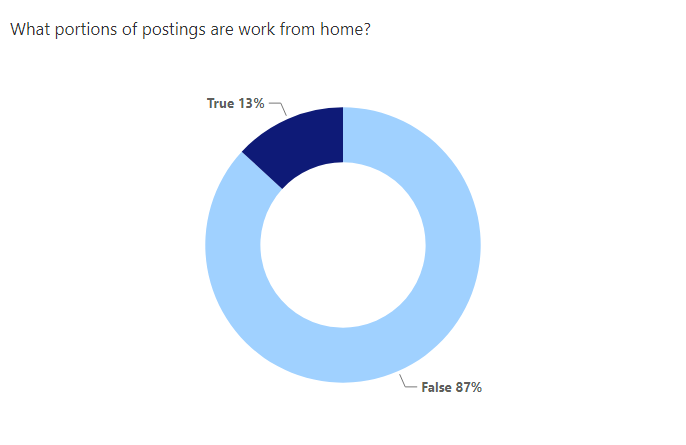
How many jobs are work-from-home?
Only 13% of postings are advertised as work-from-home. Most data roles in 2024 still expect at least some time on-site.
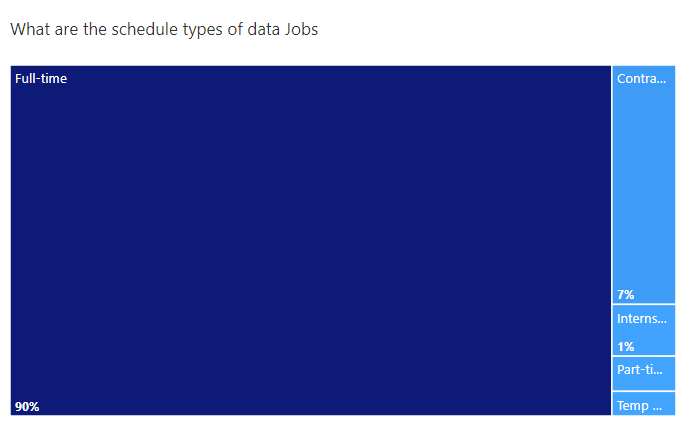
Job schedule types
Full-time roles dominate at 90% of postings, followed by contract work at 7%. Internships, part-time and temporary roles make up the small remainder.
// Data for your business
Want insights like this from your data?
I build Power BI dashboards and analyses that turn raw data into clear, decision-ready stories.